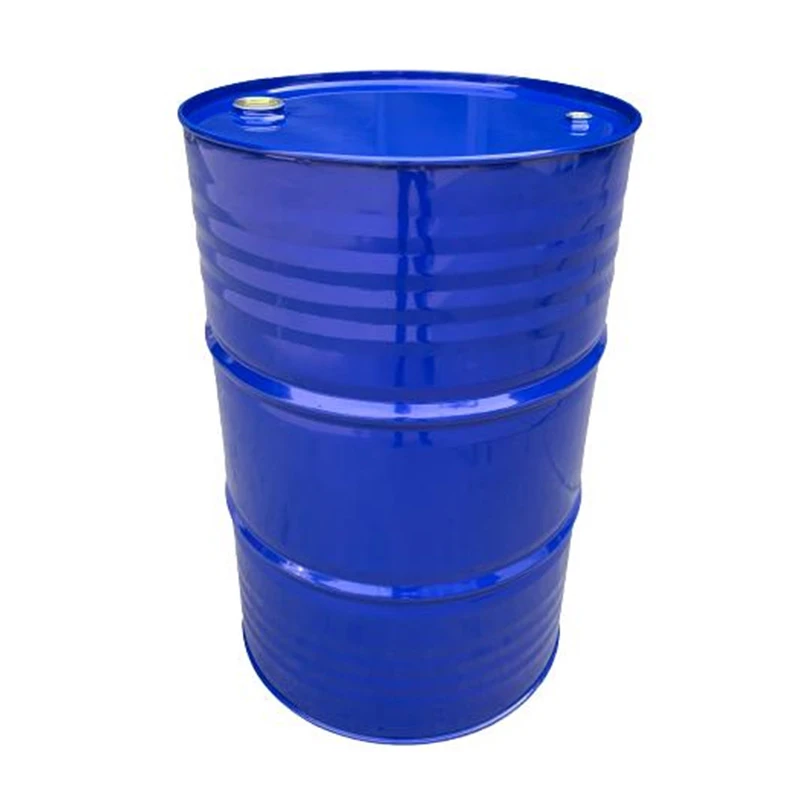

As industrial packaging requirements continue to place greater emphasis on safety, reliability, and production efficiency, cylindrical bucket technology is advancing across materials, forming processes, structural engineering, sealing systems, and quality inspection. Cylindrical buckets are widely used for paints, chemicals, food ingredients, lubricants, agricultural materials, and many other products. Their technical performance directly affects load-bearing capacity, sealing reliability, service life, and transportation safety. Through the integration of multiple technologies, modern cylindrical buckets are increasingly moving toward lightweight, precision-engineered, and functional designs.
Material technology is a fundamental part of cylindrical bucket manufacturing. Depending on the intended application, materials with appropriate strength, corrosion resistance, and environmental durability can be selected. For plastic cylindrical buckets, material formulation and processing characteristics influence toughness, rigidity, and durability. For metal versions, material strength, formability, and surface protection are important considerations. For specialized applications, compatibility between the container material and its contents must also be carefully evaluated.
Forming technology has a direct impact on dimensional accuracy and structural consistency. Modern manufacturing can use precision tooling and automated equipment to control key parameters such as wall thickness, rim dimensions, and base geometry. Consistent process control helps maintain uniformity across production batches while also reducing material waste and improving manufacturing efficiency.
Structural optimization is another important area of cylindrical bucket technology. Adjusting wall thickness, incorporating reinforcing ribs, and optimizing the base and rim can improve load-bearing performance while controlling material consumption. Lightweight design takes this approach further by using optimized materials and structural configurations to reduce container weight without compromising essential performance. This can make handling easier and help lower transportation costs.
Sealing technology is also a critical component. Optimizing the fit between the rim and lid, together with the use of sealing rings or other closure components where appropriate, can improve closure reliability and reduce the risk of leakage or external contamination. Different sealing solutions can be selected according to the characteristics of the packaged product and its operating environment.
Quality inspection technology supports the entire manufacturing process. Dimensional checks, visual inspections, sealing tests, and structural evaluations can be used to identify manufacturing issues and verify that finished containers meet the required quality standards.
Overall, cylindrical bucket technology encompasses materials, forming processes, structural design, sealing systems, and quality control. As smart manufacturing, advanced materials, and automated inspection technologies continue to develop, cylindrical buckets are expected to achieve greater production precision, stronger overall performance, and more efficient resource utilization, providing increasingly reliable packaging solutions for modern industries.